
Peptide Reconstitution Explained: Concentration, Volume, and Clarity
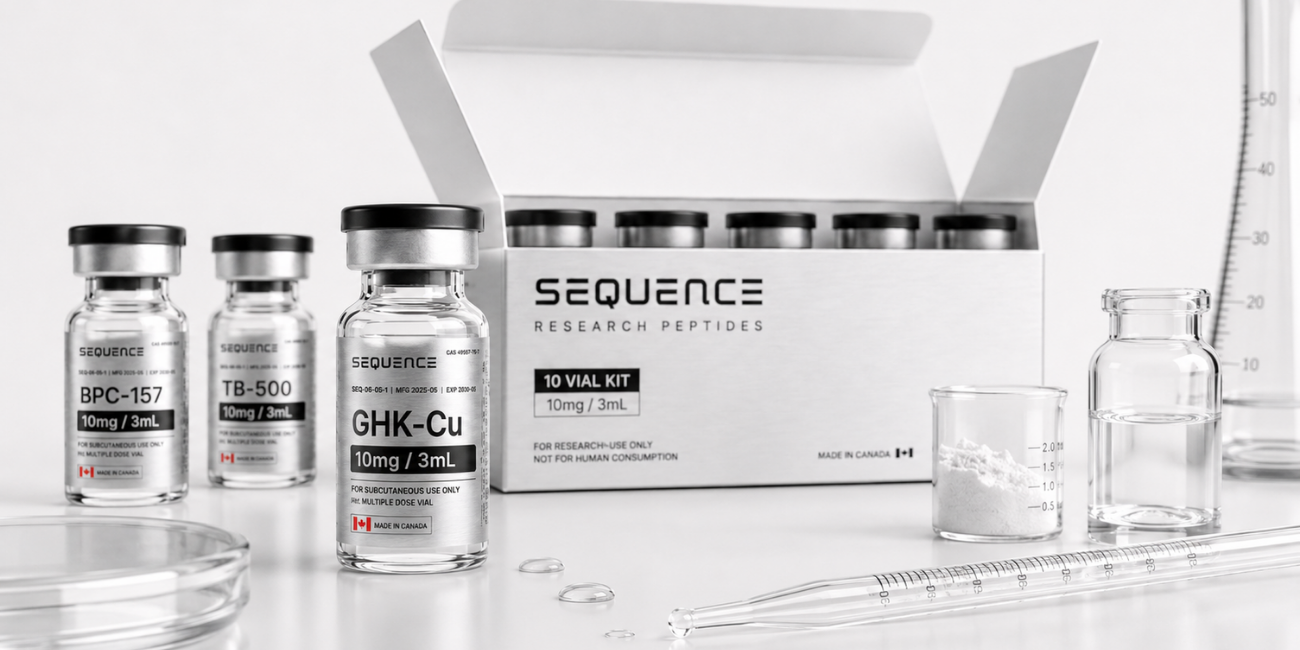
Reconstitution is one of the most misunderstood parts of peptide preparation.
Not because the concept is complicated.
Because the language around it is often sloppy.
A lyophilized peptide starts as a dry powder. Reconstitution is the process of adding a sterile diluent to that powder so it becomes a prepared solution. The peptide identity does not change. The total compound amount does not change.
What changes is the format, the volume, and the concentration context.
That distinction matters.
A vial is not just a vial.
A milligram is not a millilitre.
A prepared solution is not the same thing as dry powder.
The compound matters.
The volume matters.
The concentration matters.
And the label should make all three easy to understand.
What Reconstitution Means
Reconstitution means returning a dry compound into solution.
In the peptide world, many compounds are supplied as lyophilized powder. Lyophilization removes moisture and leaves the peptide in a dry format prior to preparation.
Reconstitution introduces a sterile liquid diluent into the vial.
The result is a prepared peptide solution.
The basic concept is simple:
dry powder + diluent = prepared solution
The compound is not being created during reconstitution. It is already present in the vial. Reconstitution simply changes the physical state from dry powder into liquid solution.
That is where the math begins.
And where the confusion usually follows.
What Changes After Reconstitution
Reconstitution changes the preparation format.
Before reconstitution, the peptide exists as dry lyophilized material. After reconstitution, it exists in liquid solution.
| Before Reconstitution | After Reconstitution |
|---|---|
| Dry lyophilized powder | Prepared liquid solution |
| Total compound amount listed on vial | Same total compound amount in solution |
| No final liquid volume yet | Final volume created by diluent |
| No liquid concentration yet | Concentration depends on final volume |
| Dry-format storage context | Prepared-solution handling context |
The key point is simple:
Reconstitution does not add more peptide. It adds volume.
The amount of peptide in the vial stays the same.
The final concentration depends on how much liquid is added.
What Does Not Change
Reconstitution does not change the compound identity.
If a vial contains 10mg of a peptide before reconstitution, it still contains 10mg of that peptide after reconstitution.
The difference is that the 10mg is now distributed throughout a liquid volume.
This is where many people get lost.
They see milligrams and millilitres on the same label and treat them like interchangeable units.
They are not.
Milligrams measure mass.
Millilitres measure volume.
One tells you how much compound is present.
The other tells you how much liquid volume exists.
Different units. Different meanings. Different jobs.
Total Amount vs Volume vs Concentration
This is the central concept.
A peptide vial may list the compound amount and the preparation volume. Those two pieces of information help establish concentration.
| Term | Meaning |
|---|---|
| Total amount | How much peptide is in the vial |
| Volume | How much liquid is used or present after preparation |
| Concentration | How much peptide exists per unit of liquid |
| Label clarity | How clearly these details are communicated |
Concentration is the relationship between amount and volume.
Two vials can contain the same total amount of peptide but have different concentrations if prepared with different final volumes.
The compound amount is the same.
The liquid volume is different.
The concentration changes.
This is not advanced chemistry.
It is clean unit logic.
The kind of thing that should be obvious on a label instead of hidden in grey-market numerology.
Why mL Matters
The abbreviation mL stands for millilitre.
It is a unit of volume.
It does not tell you the amount of peptide by itself.
A vial that says 10mg / 3mL is communicating two separate pieces of information:
10mg = total compound amount
3mL = volume context
Together, those values describe the prepared concentration context.
The problem starts when volume is treated as if it were dose, amount, or potency.
It is not.
Volume is the liquid measurement.
Amount is the compound measurement.
Concentration is the relationship between the two.
A clean label should reduce confusion, not create more of it.
The Formula Behind Concentration
The basic concentration concept is simple:
total amount ÷ final volume = concentration
If the total peptide amount stays the same, increasing the final volume spreads that peptide across more liquid.
If the final volume is lower, the solution is more concentrated.
If the final volume is higher, the solution is less concentrated.
Same total compound.
Different concentration.
That is the part worth understanding.
Not because everyone needs to become a lab technician.
Because preparation language should not feel like a decoding exercise.
Reconstitution Is Not the Same as Dosing
Reconstitution explains how a dry peptide becomes a prepared solution.
Dosing is a separate conversation.
The two are often collapsed together, which is where confusion enters.
Reconstitution involves:
- compound amount
- diluent volume
- final solution volume
- concentration
Dosing involves a different set of considerations and should not be confused with preparation format.
A clean discussion of reconstitution should stay focused on preparation clarity, not personal-use instruction.
The goal is not to tell someone what to do with a compound.
The goal is to explain what the numbers on the vial mean.
That is the line.
And it matters.
Why Poor Labeling Creates Confusion
Peptide labels become confusing when they fail to distinguish between:
- compound identity
- total amount
- vial volume
- prepared concentration
- batch information
- storage expectations
- verification pathway
A label should not make the user guess whether a number refers to total compound, liquid volume, vial size, or concentration.
That is not minimal design.
That is missing information.
Clean peptide presentation should clearly communicate:
| Label Detail | Why It Matters |
|---|---|
| Compound name | Identifies the peptide |
| Total amount | Shows how much compound is present |
| Volume context | Shows the preparation volume |
| Batch number | Supports traceability |
| MFG / EXP dates | Provides production and dating context |
| CAS number | Gives a reference identifier, where applicable |
| Storage information | Supports proper handling expectations |
| Testing reference | Connects product identity to verification |
This is where preparation and trust intersect.
The product is not only the powder in the vial.
It is also the clarity surrounding it.
Dry Format vs Prepared Format
Lyophilized and reconstituted peptides should not be treated as identical formats.
They are two different states of the same compound.
Dry format is about stability and storage before preparation.
Prepared format is about solution, concentration, and liquid handling.
The compound identity remains the same, but the practical context changes.
Before preparation, the key questions are:
What compound is this?
How much is present?
What batch does it belong to?
How should it be stored?
After preparation, the key questions become:
What final volume exists?
What concentration does that create?
How does the prepared format change handling expectations?
Clear labels reduce the gap between those two states.
The SEQUENCE Standard
SEQUENCE is built around concentration clarity because this is where many peptide products become unnecessarily confusing.
A clean label should make the essentials obvious:
Compound name.
Total amount.
Volume context.
Batch identity.
Manufacturing date.
Expiration date.
Verification pathway.
These details are not decoration.
They are the structure around the compound.
Reconstitution is not a mystical step.
It is preparation.
Preparation requires clear information.
Without clear information, the signal gets noisy.
With clear information, the product becomes easier to understand, easier to verify, and harder to misrepresent.
That is the point.
Not drama.
Not mystery.
Not basement-label calculus.
Just compound, volume, concentration, and clarity.